
Acupuncture for Chronic Pain: Is It Recommended and How Does It Work?
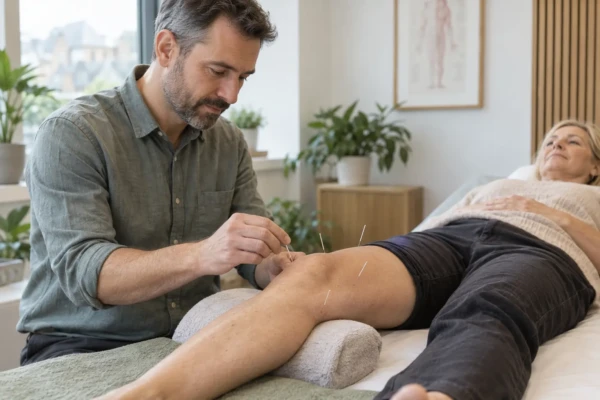
Acupuncture for chronic pain works by stimulating the nervous system to change how pain signals are processed, not just by numbing the area being treated. Fine needles trigger the body’s natural pain-relieving chemicals and can calm an over-sensitised nervous system, often what keeps long-term pain going. Acupuncture is recommended for chronic pain in NICE’s UK national guidelines, and we often combine it with myofascial release for chronic pain to address the structural side and contributing biomechanical factors too.
In short
- Acupuncture for chronic pain has some of the strongest research backing of any condition we treat
- NICE recommends considering a course of acupuncture for chronic primary pain in adults, it is also recommended by the National Institute of Health in the USA.
- A major Cochrane review supports acupuncture for chronic low back pain specifically
- It can be particularly useful for neuroplastic pain, where the nervous system keeps signalling pain after tissue has healed
- Not a substitute for investigating pain with a new or changing cause. There are some possibilities that need conventional investigation
How does acupuncture help with chronic pain?
Chronic pain is not simply a stronger or longer version of acute pain. In many cases the original tissue damage has healed, but the nervous system has learned to keep sending pain signals anyway.
Acupuncture works on several levels at once. It triggers the release of endorphins and other natural pain-relieving chemicals, it changes activity in the brain and spinal cord areas involved in processing pain, and it can reduce local inflammation around the needled area. The largest individual patient data meta-analysis of acupuncture trials, covering close to 18,000 patients across back and neck pain, osteoarthritis and chronic headache, found acupuncture produced meaningfully less pain than both sham acupuncture and no treatment, with the benefit persisting well beyond the end of treatment (NIH/PMC).
Is acupuncture recommended for chronic pain? What NICE and Cochrane say
Yes. In April 2021, NICE, the body that sets clinical guidance for the NHS, published guideline NG193 on chronic primary pain. It recommends considering a single course of acupuncture as one of the non-drug options for adults with chronic primary pain, meaning pain that exists in its own right rather than as a symptom of another disease (NICE NG193).
Separately, a 2020 Cochrane review of acupuncture for chronic non-specific low back pain found supportive evidence for its use compared with sham treatment or usual care (Cochrane). A NICE recommendation combined with Cochrane-level evidence is relatively rare in complementary medicine, which is part of why we lead with it.
What is neuroplastic pain, and can acupuncture help it?
Neuroplastic pain, sometimes called nociplastic pain, describes pain caused by the nervous system itself becoming overprotective, rather than by ongoing tissue damage. Pain researchers now recognise it as a distinct mechanism, alongside pain from injury and pain from nerve disease, and it’s thought to underlie conditions such as fibromyalgia, chronic low back pain with no clear structural cause, and some long-standing headache and pelvic pain.
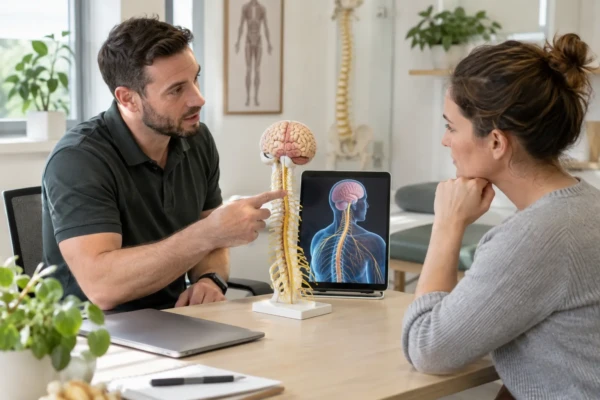
Because acupuncture works partly by changing how the nervous system regulates pain signals, rather than only treating a local injury, it fits naturally alongside other approaches to neuroplastic pain such as pain education and graded activity.
Myofascial release for chronic pain: why we combine it with acupuncture
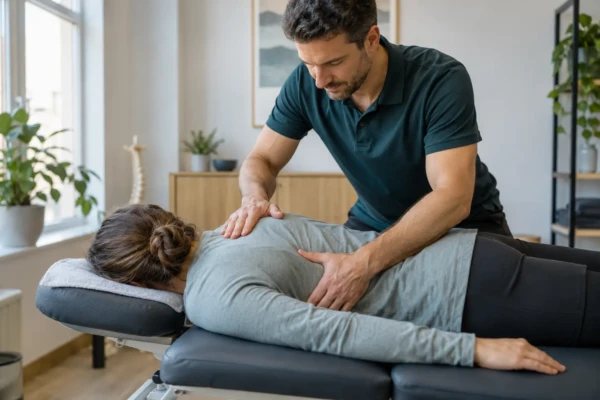
Chronic pain rarely has one single cause. Alongside acupuncture, we often use myofascial release, a hands-on technique working on the fascia and connective tissue surrounding muscles. Evidence for myofascial release alone is mixed: some systematic reviews find the evidence base too thin for firm conclusions, while a meta-analysis focused specifically on chronic low back pain found it improved pain and physical function (NIH/PMC, 2021). We use it as one part of a broader plan, addressing the fascial and postural patterns that often build up around long-standing pain. As part of an integrated therapy plan it is usually appreciated by patients as a useful inclusion.
In practice, what we see with chronic pain
In practice, we often see people whose pain has been present for years, sometimes with a scan showing very little, or findings that don’t fully explain how much pain they’re in. This mismatch between scan and symptom is common with chronic and neuroplastic pain, and it can be confusing to live with.
What we generally see is a gradual reduction in pain intensity and, just as importantly, an increase in what someone can do without a flare up. We combine acupuncture with myofascial release, movement advice, specific exercises and, where useful, referral back to your GP or consultant.
Who this may not be suitable for
Acupuncture is not the right first step for pain that is new, rapidly worsening, or comes with red flags such as unexplained weight loss, fever, or loss of bladder or bowel control. These need urgent medical assessment. It should also be approached with caution if you have a bleeding disorder or take strong anticoagulant medication. Most people with chronic pain come after these more serious possibilities have been ruled out
About your practitioner
Duncan McGechie (BA, MSc, Grad Dip, MBAcC, MRCHM, MISRM, FHEA) has practised acupuncture, myofascial release and neuromuscular therapy since 2003, giving him 23 years of clinical experience with complex and long-standing pain conditions. He is a member of the British Acupuncture Council, the British Medical Acupuncture Society, the Register of Chinese Herbal Medicine and the Institute of Sports and Remedial Massage, and has been given over 200 five star Google reviews. Read Duncan’s full profile.
Cost and booking
For current prices and our cancellation policy, see our prices page. You can book an appointment online at our Holborn WC1 or Lee/Grove Park SE12 clinics, or contact us if you’d like to talk through your pain history first.