Trigger Points
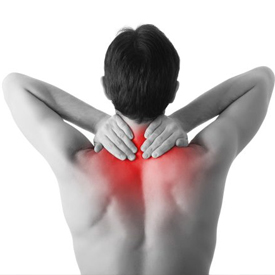
The term Trigger point referes specifically to a very tender point in the muscle tissue which refers or radiates pain to somewhere else in the body. You may be familiar with this, a sore point in your shoulders that makes your head hurt is quite common.
Trigger points come about as a response by the body to strain, this can be after injury, or chronic postural strain from work or inappropriate body use. The muscle fibres the point is in are shortened by the trigger point, which is held in contracture- the muscle can’t release as the cell messenger molecules can’t get to sites that make the muscle cells react.
This situation causes a kind of neurological excitation which is thought to explain the referred pain. In order to treat them the therapy must restore circulation, calm the neuromuscular excitation, and stretch to return the tissues to their normal resting length. This information leads us to intelligent ways of dealing with and ridding you of trigger points.
What Happens During Trigger Point Therapy in London?
At Acubody, trigger point therapy begins with an assessment of your symptoms, medical history, muscle tension and movement patterns. The aim is to understand where discomfort occurs and whether sensitive muscle areas may be contributing to your symptoms.
Treatment may involve sustained pressure, guided movement and techniques selected according to your individual needs. Duncan McGechie may use neuromuscular techniques, positional release or muscle energy techniques where appropriate.
The approach considers both immediate discomfort and wider movement patterns that may be relevant to your symptoms.
Neuromuscular Techniques
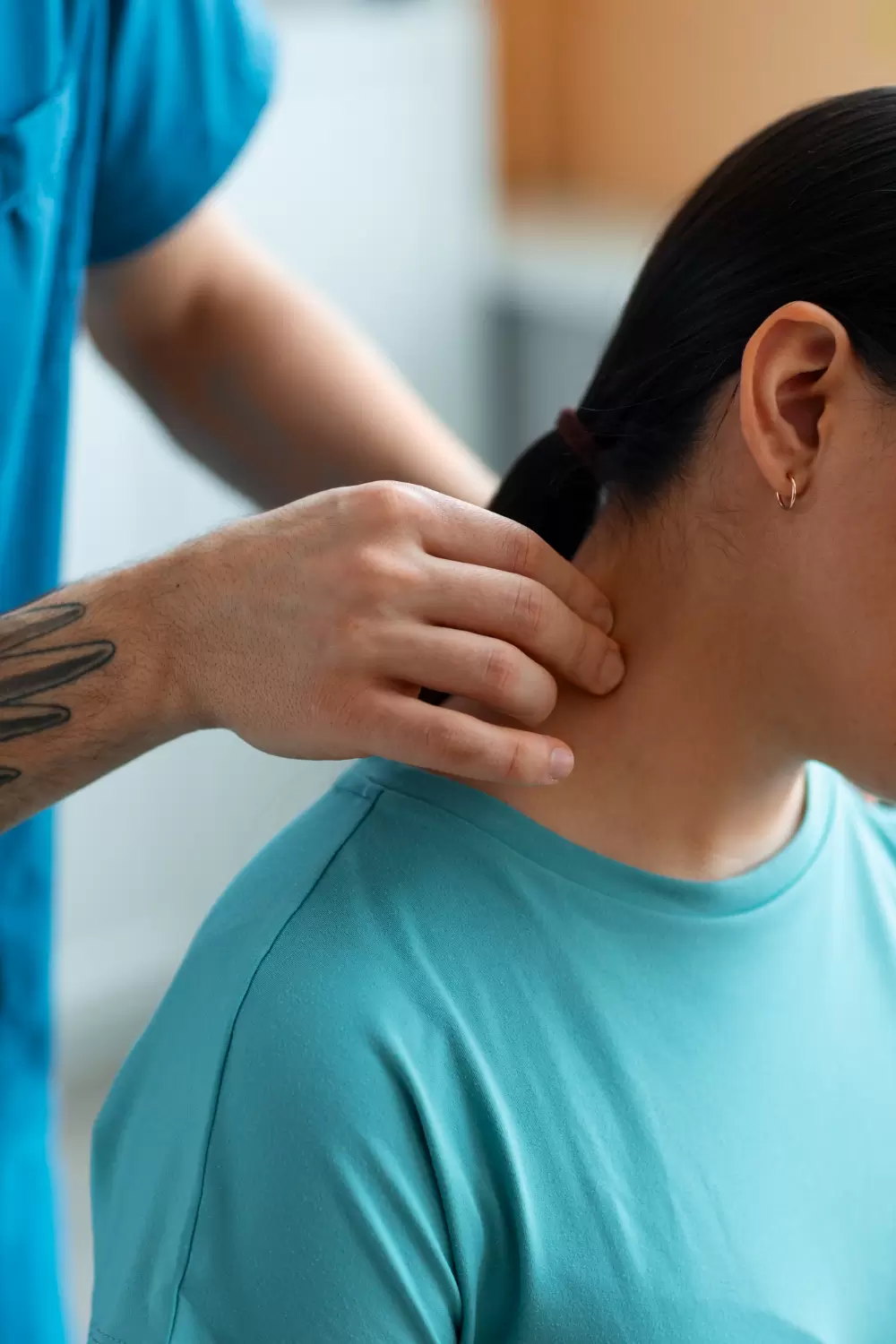
Neuromuscular techniques utilise the nervous system via precise pressure and active stimulus in order to help ‘reset’ areas of constriction, and allowing other areas to be strengthened.
It is an approach to treament that is both a detailed assessment of the soft tissues in an area and also stimulates blood flow to those tissues
preparing them for other techniques. It is an excellent way to find trigger points and can flow into treatment of these points and back into assement mode smoothly.
When performing this technique I like to get full conscious involvement of the client, so that they may become more familiar with their body, which helps to become more aware of their movement and posture in the rehabilitation process. When we include active movement in the treatment I call it Ruffini technique after training with Robert Schleip. Ruffini organs are specialised mechanoreceptors in the connective tissue which respond to directional pressure and movement by relaxing the muscle tissues.
Muscle energy technique is a way of releasing tension and improving stretch by modifying the perception of the neuromuscular system using muscle contraction. When muscle tissue is lengthened a stretch reflex starts to increase the tone of the muscle long before a person is usually able to perceive a stretch. These ‘barriers’ are an obstacle to actually lengthening your tissues as the muscles are automatically resisting the stretch. MET uses a carefully controlled isometric contraction at these barriers to reduce that tone and allow a greater stretch and release of those tissues.
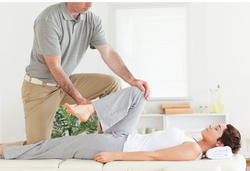
Positional release is very useful in situations of acute spasm, the treatment of trigger points and in more chronic tension patterns. The principle is like the opposite of a stretch, sometimes tension or spasm is a reflex response to stretching muscle fibres, the ‘stretch reflex’ also responsible for the knee jerk reaction.
In such cases stretching just perpetuates the situation as the body’s automatic response is to tighten more. Positional release works by moving the tissue around until its ‘position of ease’ is found, this is the point where the tissue is most soft. Holding it here for a time (minute to a minute and a half) helps the neuromuscular system reset and helps the spasm release.
Myofascial release
Myofascial release involves pressure on the tissues, slowly up to a point of resistance, the pressure is then maintained and the tissue allowed to relax effectively stretching the muscle unit. As such this technique can be used as part of trigger point therapy to reduce muscle tone and stretch shortened tissues.
 Specific movement used along with myofascial release helps the release of tight tissues by encouraging blood flow and also helps retrain more helpful posture and movement patterns.
To treat or not to treat
Some practitioners think trigger points are a warning sign and that they shouldn’t actually be treated to relieve pain, but rather only used as monitors of progress in postural or exercise therapy.
Our view is that it depends on the situation and the person, simply releasing lots of trigger points will only be effective for a limited time, and may cause a ‘crisis’ where the persons system can’t cope with so much change at once and their symptoms get worse 2 or 3 days after the treatment.
This is why alignment exercises, stretching and movement education is so important, the manual release of the points reduces symptoms and pain and restores mobility so the exercises can be done, the exercises and postural education helps prevent their return by facilitating more functional posture and movement.
About Your Trigger Point Therapist in London
Duncan McGechie has practised myofascial and neuromuscular bodywork since 2006, alongside acupuncture since 2003.
His training includes therapeutic bodywork, trigger point therapy, myofascial release, positional release and muscle energy techniques. He holds professional memberships including MISRM, MBAcC and MRCHM.
Duncan’s approach combines hands-on treatment, movement assessment and active patient participation where appropriate. Each appointment considers the individual’s symptoms, movement restrictions and treatment goals.
Book Trigger Point Therapy in London
Looking for trigger point therapy in London for muscle tension, stiffness or referred pain?
Acubody offers individualised bodywork appointments, including trigger point therapy, neuromuscular techniques and myofascial release therapy where appropriate.
Discuss your symptoms and treatment options with Duncan McGechie.