 by admin
 19 August 2026
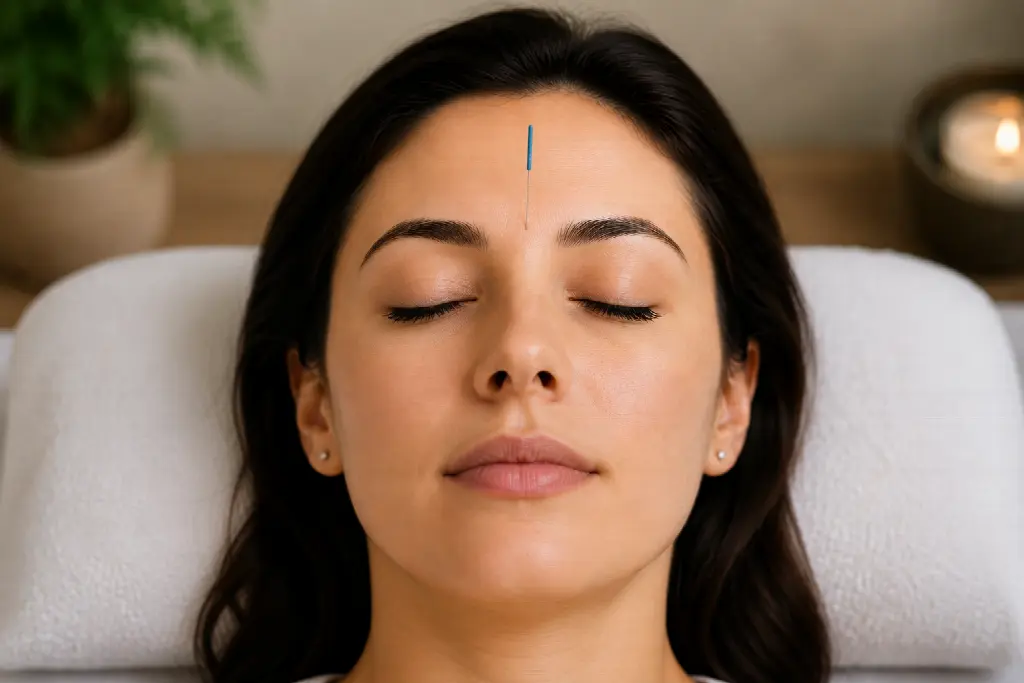
Yin Tang acupuncture is a traditional Chinese medicine technique that focuses on a point located between the eyebrows. Known as the “Hall of Impression” or EX-HN3, this point is commonly used to promote relaxation, calm the mind, improve sleep quality, relieve stress, and ease facial tension.
Although Yin Tang has been used for centuries, researchers continue to investigate exactly how it affects the nervous system and whether it influences physiological processes associated with anxiety, sleep, and pain perception.
Unlike many acupuncture points located along the body’s primary meridians, Yin Tang is classified as an extra point. Despite its relatively small size, it remains one of the most frequently used acupuncture points in clinical practice. Acupuncture clinics throughout New York City, including ACA Acupuncture and Wellness, commonly incorporate Yin Tang into individualized treatment plans designed to support relaxation, stress management, sleep quality, and overall well-being.
Key Takeaways
- Yin Tang is located between the eyebrows.
- The point is also known as the Hall of Impression or EX-HN3.
- Traditional Chinese Medicine associates the point with calming the mind and regulating the flow of qi.
- Modern researchers are studying its effects on stress, sleep quality, pain perception, and relaxation.
- Yin Tang may be stimulated through either acupuncture or acupressure.
What Is the Yin Tang Acupuncture Point?
The term Yin Tang translates roughly to “Hall of Impression,” a name that reflects the point’s traditional association with awareness, concentration, emotional balance, and mental clarity.
In Traditional Chinese Medicine (TCM), Yin Tang is classified as an extra point rather than a point belonging to one of the twelve principal meridians. Nevertheless, practitioners frequently incorporate it into treatment plans because of its close relationship with emotional well-being and the concept of shen, which is often described as the spirit, consciousness, or mind.
Yin Tang is perhaps best known outside of traditional medicine as the “third eye point.” Although this term originates from spiritual traditions rather than acupuncture theory, it has become a common way of describing the location and function of the point.
Where Is the Yin Tang Point Located?
Yin Tang lies in the center of the forehead, directly between the inner ends of the eyebrows.
Because the point is easy to locate, it is often used in both professional acupuncture treatments and self-administered acupressure techniques.
Gentle stimulation typically involves applying steady pressure with a fingertip while maintaining slow, controlled breathing.
Despite the simplicity of its location, practitioners rarely evaluate Yin Tang in isolation. Traditional Chinese Medicine emphasizes that symptoms arise from patterns of imbalance affecting the entire body rather than a single area.
How Does Yin Tang Acupuncture Work?
Traditional Chinese Medicine teaches that acupuncture helps regulate the movement of qi, the body’s vital energy. According to this perspective, illness may develop when the flow of qi becomes disrupted or unbalanced.
Yin Tang is traditionally used to calm excessive mental activity, regulate emotional disturbances, and encourage relaxation. Practitioners frequently select the point when patients experience stress, restlessness, irritability, or difficulty sleeping.
Modern researchers have proposed several additional explanations.
Some studies suggest that acupuncture may influence the autonomic nervous system, which controls functions such as heart rate, breathing, blood pressure, and digestion. Others have explored whether acupuncture affects neurotransmitters involved in pain perception and emotional regulation.
Researchers continue to investigate whether stimulation of the Yin Tang region influences cortisol levels, inflammatory pathways, and activity within the central nervous system.
Although much remains unknown, these theories offer possible explanations for why many individuals report feelings of calmness after treatment.
What Is Yin Tang Acupuncture Commonly Used For?
Anxiety and Stress
Yin Tang is widely associated with stress reduction and relaxation.
In Traditional Chinese Medicine, emotional disturbances are viewed as manifestations of imbalance within the body’s interconnected systems. Stimulating Yin Tang is believed to help restore harmony while reducing feelings of tension and restlessness.
Sleep Difficulties
Practitioners frequently include Yin Tang in treatment plans designed to improve sleep quality.
The point is often selected when patients experience difficulty falling asleep, frequent waking, racing thoughts, or excessive stress.
Headaches and Facial Tension
The location of Yin Tang makes it particularly relevant for conditions affecting the forehead and surrounding facial muscles.
Individuals experiencing tension headaches sometimes report relief after acupuncture or acupressure sessions involving the point.
Sinus Congestion
Yin Tang is commonly combined with other acupuncture points that support circulation and help relieve pressure within the sinuses.
Practitioners may recommend a comprehensive treatment strategy rather than focusing exclusively on a single point.
Meditation and Relaxation Practices
Many meditation traditions emphasize focused breathing and concentration techniques involving the area between the eyebrows.
Although these practices differ from acupuncture, they illustrate the longstanding association between this region and states of calmness and self-awareness.
What Does Research Say About Yin Tang Acupuncture?
Several studies have examined the effects of Yin Tang stimulation in clinical settings.
Researchers have reported reductions in anxiety among individuals preparing for surgical procedures. Other studies have investigated whether acupuncture and acupressure improve sleep quality, reduce pain, or promote relaxation.
Despite these findings, important limitations remain.
Many studies involve relatively small groups of participants, employ different treatment methods, or combine Yin Tang with several other acupuncture points. Consequently, it can be difficult to determine whether improvements result specifically from stimulation of Yin Tang itself.
Researchers generally agree that additional large-scale studies are necessary.
What Happens During a Yin Tang Acupuncture Session?
An initial consultation often begins with a discussion of symptoms, medical history, lifestyle habits, sleep patterns, diet, and stress levels.
Traditional assessments may also include observations of the tongue and pulse.
After identifying patterns of imbalance, the practitioner inserts a very thin needle into the Yin Tang point. Depending on the treatment plan, additional points may also be selected.
Many people describe sensations such as warmth, heaviness, tingling, pressure, or mild fullness around the area.
Sessions typically last between twenty and forty-five minutes.
Yin Tang Acupuncture Versus Yin Tang Acupressure
Acupuncture involves inserting extremely thin needles into specific points under the supervision of a licensed practitioner.
Acupressure relies on manual stimulation without the use of needles.
Some individuals prefer acupressure because it can be performed at home, while others seek acupuncture because of its individualized and comprehensive approach.
Both methods are intended to encourage relaxation, although they differ considerably in technique and intensity.
Can You Stimulate Yin Tang at Home?
Many people incorporate Yin Tang acupressure into their daily routines.
To do so, gently place your fingertip between your eyebrows and apply light pressure for several minutes while breathing slowly and evenly.
Excessive pressure should be avoided, and persistent symptoms should always be evaluated by a qualified healthcare professional.
Home care should never replace medical treatment for serious or ongoing conditions.
Side Effects and Safety Considerations
Acupuncture is generally considered safe when performed by properly trained professionals using sterile equipment.
Potential side effects may include temporary soreness, mild bruising, slight bleeding, or brief dizziness.
Individuals with bleeding disorders, implanted medical devices, or certain underlying medical conditions should consult a healthcare professional before beginning treatment.
Pregnant individuals should also discuss acupuncture with an experienced practitioner.
How to Choose a Qualified Acupuncturist
Selecting an experienced practitioner is essential.
Consider the following factors when evaluating a provider:
- State licensing requirements
- National certifications and professional regulatory memberships
- Clinical experience
- Clean needle techniques
- Individualized treatment plans
- Transparent communication
Many established clinics also offer complementary therapies, including herbal medicine, cupping therapy, massage techniques, breathing exercises, and lifestyle counseling.
Frequently Asked Questions
Is Yin Tang the same as the third eye point?
The terms are often used interchangeably, although the phrase “third eye point” originates from spiritual traditions rather than classical Chinese medicine.
Can Yin Tang help anxiety?
Traditional Chinese Medicine has long associated the point with relaxation and emotional balance. Research continues to examine these effects in greater detail.
How long should pressure be applied to Yin Tang?
Many people apply gentle pressure for one to five minutes while focusing on slow breathing.
Can Yin Tang improve sleep quality?
Practitioners commonly include the point in treatment plans designed to support healthy sleep patterns.
How often is Yin Tang acupuncture performed?
The ideal treatment schedule varies according to the individual’s symptoms, goals, and overall health.
Can I stimulate Yin Tang every day?
Gentle acupressure can often be performed daily, although persistent symptoms should be evaluated by a qualified professional.
Why Yin Tang Continues to Be One of the Most Important Acupuncture Points
Few acupuncture points are as widely recognized as Yin Tang. Its accessible location, extensive history, and association with relaxation have made it one of the most frequently used points in Traditional Chinese Medicine.
While modern research continues to evolve, Yin Tang remains an important example of how ancient medical traditions continue to influence contemporary approaches to wellness, stress management, and holistic care.