
 by admin
 12 November 2026

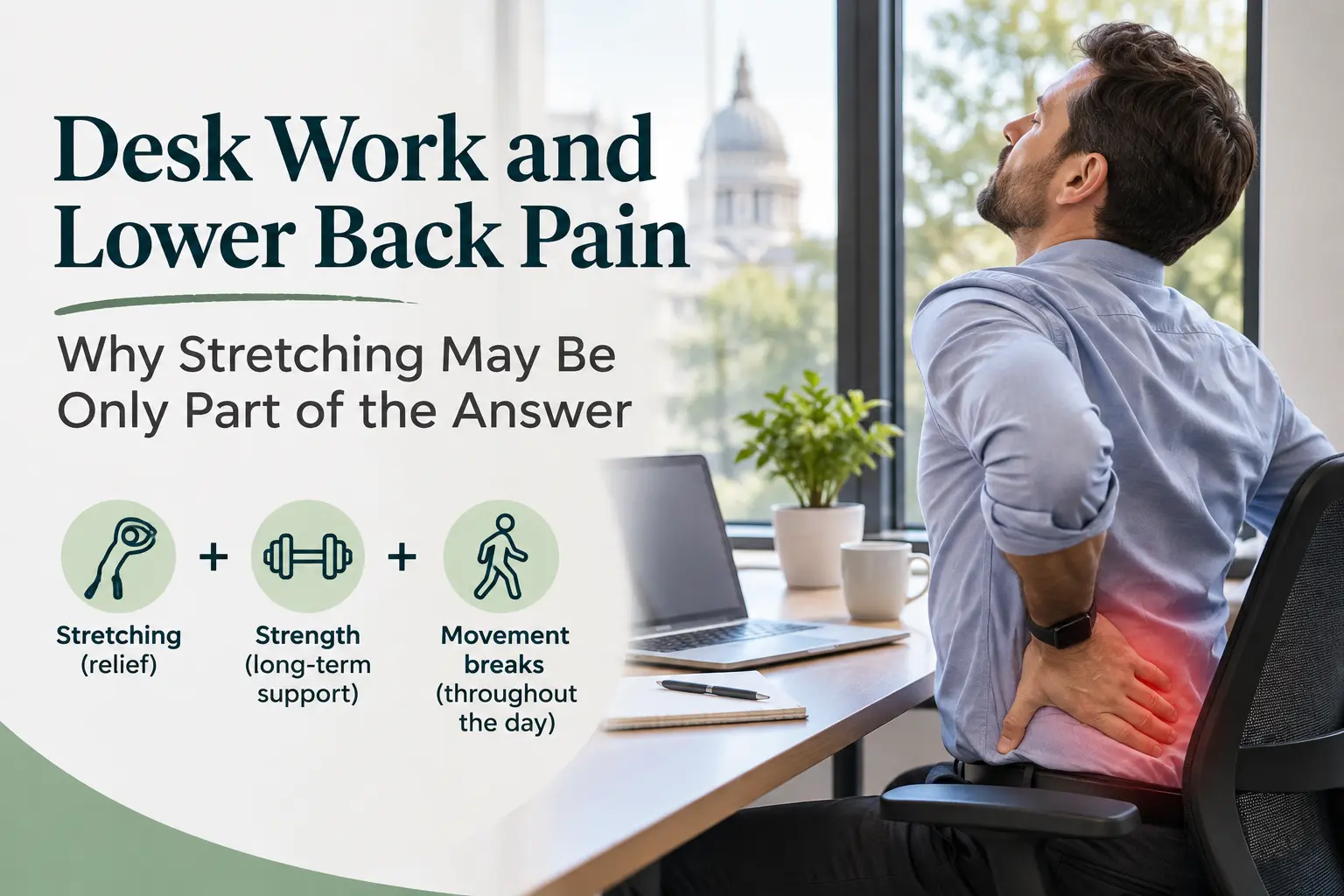
Are your days spent moving between a laptop screen, tube commutes, and back-to-back meetings? Then that nagging ache in your lower spine probably feels like an unwelcome colleague, doesn’t it?
You might instinctively reach for a quick hamstring stretch between calls, yet the discomfort keeps returning. That’s not enough!
Yes, stretching does offer relief and makes you feel good, but for lasting comfort, you usually need to look at the bigger picture.
Why Can Back Discomfort Build During a Desk Day?
Keeping any particular position for several hours leads to muscle fatigue, but there is no direct connection between desk work and lower back pain. Sitting cannot be singled out as the only factor.
Back problems are determined by a complicated combination of different factors, such as poor sleep, high stress levels at work, the amount of physical activity you do, and personal movement style.
Attributing every ache to a single bad posture or one tight muscle oversimplifies how our bodies handle daily demands.
What Can Stretching Help With?
Gentle stretches for back pain can be a wonderful technique for relieving instant muscle tension, enhancing temporary joint flexibility, and allowing yourself a respite from immobility.
Nevertheless, the effects of stretching are often only short-term changes in tissue sensitivity and not necessarily the development of strength and endurance in order to protect your spine all week long. They can be seen as the first stage in changing your body’s response to load.
What Else Is Worth Considering Alongside Stretching?
To support your back, mix stretching with frequent changes in posture, short walks, and proper workplace arrangement.
Long-term resilience often comes from gradually increasing progressive strength exercise outside of work. So, rather than following a rigid routine, focus on varying your movement throughout the week to build tolerance and strength.
How Can You Make Movement Fit an Office Day?
Incorporating movement breaks into a busy day is not limited to an exercise class in the gym lasting for one hour. One can stand while talking on the phone, take a walk during lunchtime, or incorporate walking to and from work by skipping the elevator ride and taking the stairs instead.
Such small, adaptable adjustments keep your body moving without disrupting your workday.
Where Can Assessment and Hands-On Care Fit?
If you are experiencing persistent lower back pain from sitting, an individual assessment can help identify your specific movement patterns and load capacity. Hands-on approaches, such as myofascial release in London, alongside targeted exercise guidance, can help restore movement confidence.
Through a thorough professional assessment, we can pin down the precise factors contributing to your discomfort rather than relying on general advice. As a graduate of the Go-To Physio Mentorship program and a certified GMB Fitness Trainer, Duncan from Acubody integrates advanced clinical assessment with functional, bodyweight-based movement training. This unique combination allows me to design highly tailored rehab programs that address the underlying drivers of discomfort, bringing a comprehensive range of expertise to support even the trickiest, most persistent cases.
Clinics, such as Acubody, provide tailored back pain service information to help desk worker back pain sufferers manage discomfort, without promising quick fixes or guaranteed cures.
When Does Lower Back Pain Need Medical Advice?
Back pain usually gets better with time and exercise; however, if it persists or worsens, you should visit a clinical professional for a checkup.
If you have back pain along with a numbing sensation around your genitals/buttocks, trouble urinating, problems controlling your bowels, muscle weakness in your legs, or generally feel sick with a fever, see a medical professional immediately.
It is usually due to being in a static posture for long periods coupled with stress, tiredness, and general movement patterns.
Yes, but it will give only short-term relief in terms of pain and flexibility. For long-term results, combine it with strength exercises and movement practices.
Back pain can have many causes, so there is no one quick fix, but it’s often because the back is working too hard. Often strengthening the legs, the core muscles and improving hip and ribcage mobility helps a lot.
Stand up while talking on the phone, go for a walk at lunchtime, or change your commuting routine to get more steps in. Biomechanics advice is that standing up and moving around even for 1-2 mins every 45 mins or so can change your ’body geometry’ enough to prevent the adaptive shortening in your muscles.
If you experience it for several weeks in a row, it interferes with your sleep, or if it gets worse with exercise.
Hands-on care helps ease acute tension and discomfort and improve mobility, making it easier to engage in active rehabilitation.
Try introducing one new movement break to your afternoon today. If you’d like to explore tailored care, feel free to contact Acubody to discuss an assessment.