 by admin
 12 August 2026
It is a scenario I see constantly in my clinic: an active runner or dedicated walker comes in, frustrated because their calves feel like rock-hard cables. They have spent weeks leaning against walls, pulling their toes back, and diligently stretching their hamstrings, hoping to release the tension along the back of their legs. Yet the moment they go for a long walk or step out for a morning run, those sharp, sudden calf cramps return.
If this sounds familiar, there is a reason passive stretching isn’t giving you lasting relief. Seeking targeted acupuncture in London can help address the root cause of chronic calf tightness, helping you break the cycle of recurring tension and painful spasms.
The Biomechanical Fallacy: Why Stretching Isn’t Working
When we experience tension in our muscles, we tend to stretch them out naturally. Nevertheless, when our calf muscles are chronically tense and cramped, especially the gastrocnemius and deep soleus, they do not have this condition because of insufficient muscle length.
- Neurological High Tone: Often, the brain holds a muscle in a state of chronic low-grade contraction to protect a nearby joint or compensate for weakness elsewhere in the chain. Stretching a muscle that is firing defensively only triggers its stretch reflex, causing it to contract even tighter.
- Fascial Adhesions and Dehydration: The calf and hamstring are connected by the superficial back line of fascia. When micro-trauma builds up, the fascial layers become sticky and lose their natural glide. Stretching a sticky fascial plane is like trying to pull apart two glued pieces of paper. It creates strain rather than release.
- Poor Local Microcirculation: A cramping muscle is an exhausted muscle deprived of smooth blood flow. Passive pulling does not flush out trapped metabolic waste or restore oxygenation to the muscle belly.
How Acupuncture Releases Stubborn Calf Tightness
At Acubody, I combine myofascial trigger point therapy with traditional East Asian medicine to reset muscle function from the inside out:
- Identifying the actual cause in YOUR body: The key to successful treatment of any kind is to pay attention to the individual situation in the body. This might mean activation of another muscle, work to stabilise a joint, mobilise another joint, or practise different coordination. This is one reason simply trying out stretches or exercises you see on social media often doesn’t work and ends up confusing. It’s the benefit of getting specialist personalised advice spcific to your history.
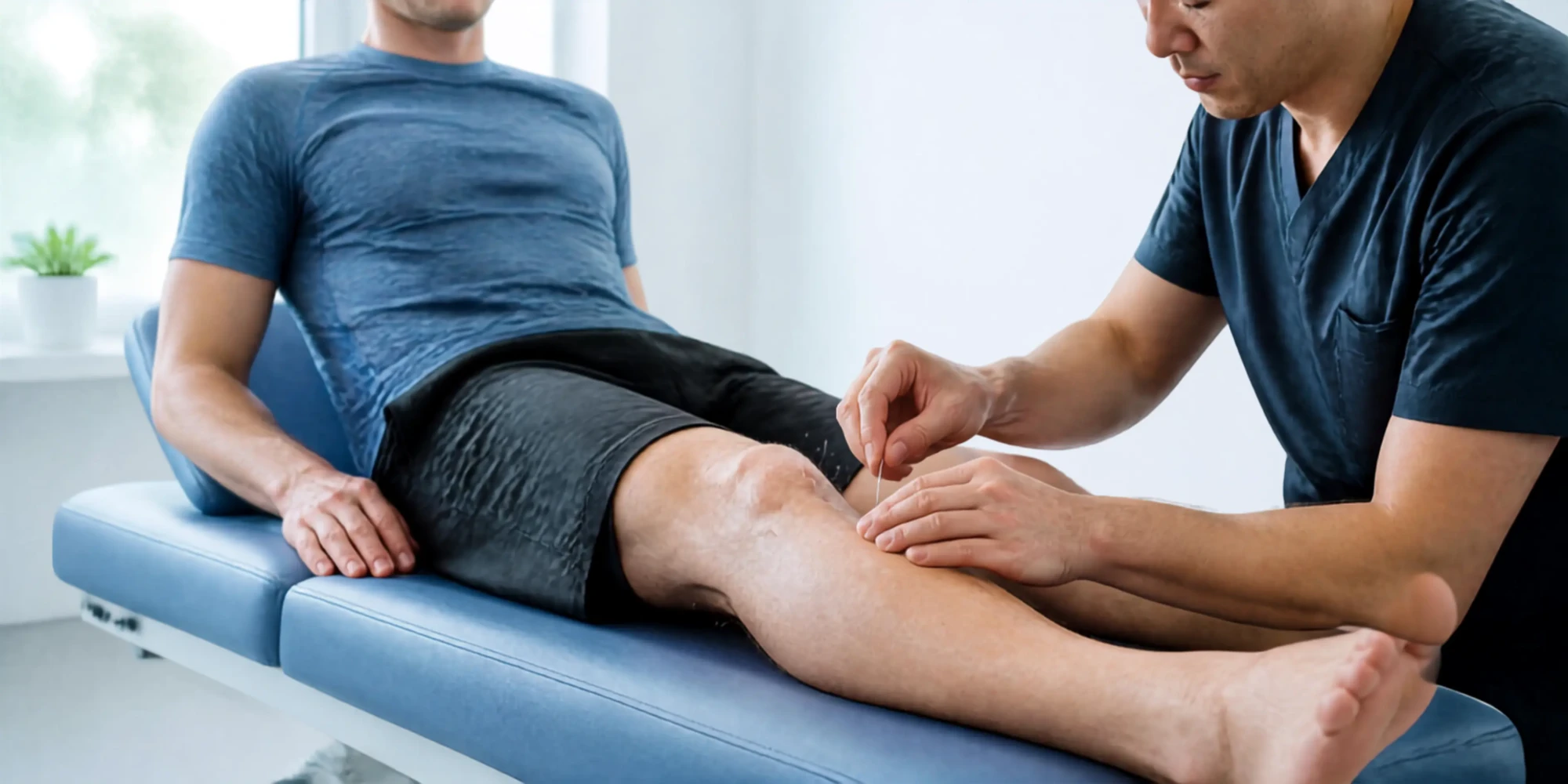
- Releasing the Anchor Points: Instead of forcing the tissue from the outside, we insert ultra-fine needles directly into active trigger points in the calf. This produces a local twitch response, a physical involuntary contraction that instantly resets the muscle’s neurological tone and relaxes the spasm.
- Opening the Bladder Channel: In Acupuncture, the calf is dominated by the Bladder meridian, which governs the entire posterior chain of the body. Key distal points like Bladder 57 (Chengshan), located right at the apex of the calf muscle, are renowned for relieving cramping, unbinding the fascia, and relaxing tension all the way up to the lower back.
- Neuromuscular reset: Both acupuncture and many of the manual techniques I use affect specialised receptors in the muscle fascia which help the nervous system reorganise the balance of tension, reassuring the muscle that it can work again
- Restoring Vascular Flow: Needle stimulation triggers local vasodilation, flooding the tight muscle fibers with fresh, nutrient-rich blood and encouraging natural tissue rehydration.
Restoring Balance to the Whole Chain
At my clinic, we are not simply going to treat the cramped muscles, but rather how your whole body moves. Identifying the reason for YOUR tight calves is the first step. Often, tight calf muscles are compensating for weak glutes, hamstrings, limited range of motion at the ankles, or any imbalances in your feet. There are many possible parts of the chain that might be the cause, by being specific to you rather than making assumptions, we can decide the best strategy for you.
As a member of the British Acupuncture Council (MBAcC), accredited by the Professional Standards Authority (PSA), I ensure your treatment meets the highest clinical standards in the UK, offering an integrated, evidence-based approach that treats you as a whole person, not just a set of symptoms.
Ready to Move Without Pain?
If you are tired of daily stretching routines that yield no real results, it is time to try an approach that addresses the underlying fascial and neurological restrictions. Visiting a London clinic specialising in acupuncture, like Acubody, can help release deep-seated muscle tension and restore smooth, comfortable movement.
Arrange your first consultation now at Acubody Holborn or our Grove Park location in Lewisham. If you would like to ask us some questions or talk about your own unique problems prior to treatment, please give us a call. Let’s work together to make sure your legs are light and pain-free.