by admin
 7 April 2026
If you are visiting a specialist for the first time, you might expect a blood pressure cuff or a physical exam of your joints. However, one of the first things an acupuncturist in London will ask you to do is stick out your tongue.
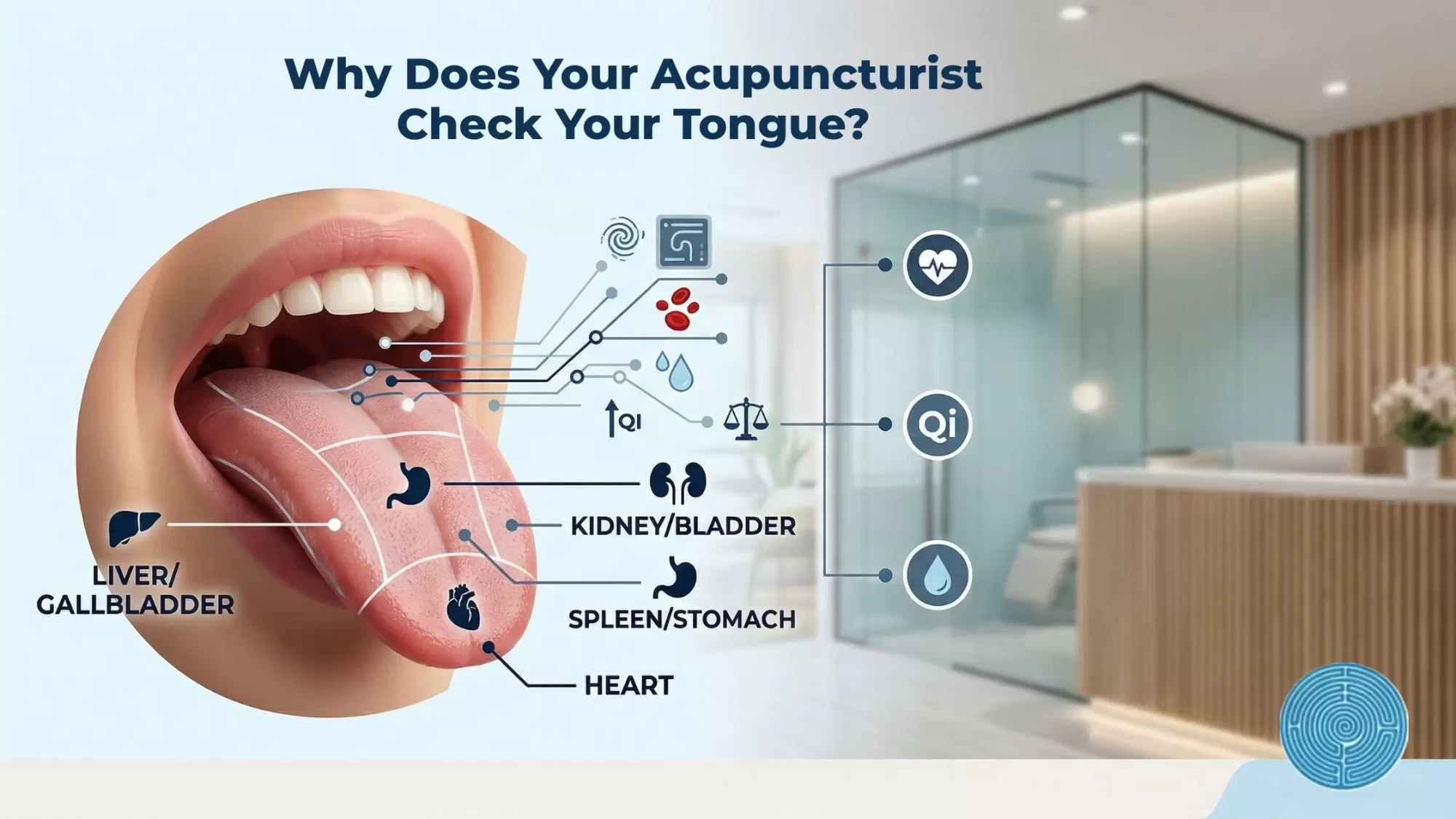
To the uninitiated, this feels a bit strange. Perhaps even a little unscientific. But in the world of Traditional Chinese Medicine (TCM), your tongue is one of the most sophisticated diagnostic tools we have. It is essentially an internal dashboard that reflects the state of your circulation, digestion, and energy levels.
Is tongue diagnosis actually based on science?
While it may seem quirky, tongue diagnosis is rooted in the physiological reality that the tongue is the only internal organ we can see from the outside. It is highly vascular and constantly bathed in saliva, making it incredibly sensitive to changes in your body’s chemistry. When you seek out Chinese acupuncture in London, your practitioner is looking at three specific markers: the color of the tongue body, the shape, and the coating (the thin layer on the surface).
What are the different tongue colors telling us?
The colour of your tongue is a direct window into your blood circulation and heat levels.
- A Pale Tongue: This often suggests a deficiency in Qi (energy) or blood. In a busy city like London, we often see this in clients who are overworked, nutritionally depleted, or struggling with chronic fatigue.
- A Bright Red Tongue: This indicates Internal Heat. If you are dealing with high-stress levels, inflammation, or even a brewing migraine, your tongue will often turn a darker shade of red, especially at the tip (which represents the heart and mind).
- A Purple or Dusky Tone: This is a classic sign of Blood Stagnation. It suggests that your circulation isn’t quite as efficient as it should be, which is a common finding for people with chronic pain or sedentary office jobs.
What does the shape and scalloping mean?
Have you ever noticed teeth marks along the edges of your tongue? In TCM, these are called scalloped edges. They suggest that the tongue is slightly swollen and pressing against your teeth. Scientifically, this often points to fluid retention or a sluggish digestive system. It tells your practitioner that your body is struggling to transform the food you eat into high-quality energy, leading to that heavy feeling many Londoners experience by mid-afternoon.
Why do I have a coating on my tongue?
The thin layer of moss on your tongue reflects the state of your gut health. A thin, white, transparent coating is perfectly healthy. However, a thick yellow coating can suggest an accumulation of Damp-Heat (inflammation or infection), while a completely peeled or shiny tongue might suggest your body is struggling with hydration and recovery.
How does this change my treatment?
The beauty of this diagnostic method is that it allows for a truly personalised session. If your tongue shows signs of heat, your acupuncturist will use points to clear inflammation and calm the nervous system. If it shows Stagnation, the focus shifts to moving blood and breaking up physical tension.
Instead of a one-size-fits-all approach, looking at your tongue ensures that your treatment is tailored to exactly what your body needs on that specific day. It is a non-invasive full-body scan that helps us get to the root cause of your symptoms before we even pick up a needle.
Book your clinical assessment to see what your internal dashboard is telling you.